How Your Amazon Prime Habit is Secretly Changing the Real Estate Industry
There’s a unique, almost magical satisfaction that comes with hearing the thud of a Prime package on your doorstep. You clicked “Buy Now” yesterday, and today, your item has appeared. This modern convenience feels effortless, a product of sophisticated algorithms and futuristic drones. But the reality is far more grounded. That magic is powered by a massive, physical transformation of the world around us—a transformation that is fundamentally reshaping our cities, neighborhoods, and the value of property itself.
That simple click sets in motion a complex chain of real-world events. At ruthannallen.com, we specialize in uncovering the deep connections between consumer trends and the real estate market. We provide the high-value expertise to see beyond the headlines and understand the foundational forces shaping property value today and tomorrow. Our analysis goes deeper than surface-level observations, revealing the intricate ways your daily habits influence the buildings we work in, the stores we shop at, and the communities we call home.
This article will pull back the curtain on the e-commerce revolution. We will reveal the secret ways your demand for instant gratification is revolutionizing industrial, commercial, and even residential real estate, giving you the insight needed to navigate this new landscape.
Key Takeaways
- The demand for 1-2 day shipping has created a “last-mile” real estate boom, making small, urban warehouses incredibly valuable.
- Industrial real estate, once a boring asset class, is now one of the hottest sectors due to the need for massive fulfillment centers.
- Traditional retail spaces are being forced to adapt, with many being converted into logistics hubs or “dark stores.”
- Residential real estate is also changing, with new buildings designed for package delivery and home values being impacted by proximity to logistics infrastructure.
- Understanding these trends is crucial for making informed decisions as a homeowner, investor, or business owner.
TL;DR
Your daily Amazon Prime habit fuels a massive demand for speed and convenience, which has ignited a “gold rush” for strategically located warehouses and fulfillment centers. This “Amazon Effect” is driving up industrial property values, forcing the transformation of failing retail malls, and even changing the design of new apartment buildings and the traffic patterns in your neighborhood.
Your expectation for next-day delivery has created a new, highly valuable category of real estate: the last-mile distribution center.
The most direct and powerful impact of the e-commerce boom is the creation of a new real estate asset class focused entirely on speed. To shrink delivery times from days to hours, the warehouse can no longer be a distant, rural outpost; it must be your neighbor.
What is a “last-mile” facility?
Last-Mile Facility: A smaller, strategically located warehouse situated in or very near a dense urban or suburban population center, designed for the final stage of the delivery process.
Unlike the traditional, sprawling warehouses built for long-term storage in remote locations, the last-mile facility is all about velocity. Its primary function is to receive goods from larger fulfillment centers, sort them quickly, and load them onto local delivery vans. According to a report from CBRE, the demand for U.S. industrial real estate space under 120,000 square feet—a common size for last-mile facilities—has been a significant driver of the market, showcasing the intense focus on getting products closer to consumers.
Why your neighborhood is the new frontier
To fulfill a two-hour or same-day delivery promise, a company like Amazon needs its inventory to be embedded within the community it serves. This has turned the search for suitable last-mile locations into an urban real estate frenzy. Companies are now competing for limited industrial-zoned land inside city limits, pushing up land prices in areas previously overlooked. This competition extends to infill locations, small plots of land, and older industrial buildings that can be retrofitted for modern logistics, making proximity to residential rooftops a key factor in commercial property valuation.
The rebirth of dead malls and vacant stores
One of the most visible signs of this shift is the adaptive reuse of defunct retail spaces. The same consumer behavior that hollowed out “big-box” stores and shopping malls is now giving them a second life. A former Sears, Kmart, or even an entire shopping mall is often perfectly positioned for logistics: it has ample parking for delivery vans, existing loading docks, and is located near major transportation arteries and population centers. In 2021, Amazon was the top lessee of former department store real estate, converting these retail graveyards into bustling fulfillment and sorting centers, a trend that continues across the country.
The insatiable need for storage has made industrial real estate one of the hottest sectors on the market.
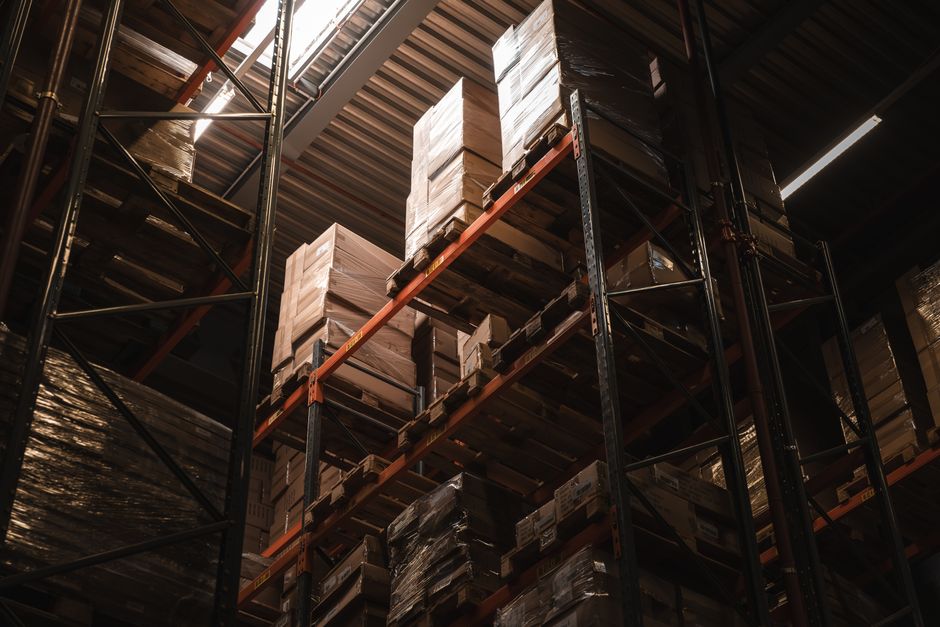
The “Amazon Effect” extends far beyond the last mile, fundamentally elevating the entire industrial real estate sector from a functional necessity to a premier investment class. The relentless growth of e-commerce, which now accounts for a significant and growing portion of total retail sales, requires a massive physical footprint for storing, sorting, and shipping goods.
How warehouses became more valuable than office towers
A seismic shift has occurred in commercial real estate investment. For decades, gleaming office towers in major downtowns were considered the pinnacle of real estate assets. Today, the stability and growth potential of industrial properties have made them far more attractive to institutional investors. While the office and traditional retail sectors face uncertainty, the demand for logistics space is constant and growing. This has led to record-low vacancy rates and soaring rental growth for industrial properties, often outpacing all other commercial real estate sectors.
The impact on land use and zoning laws
This industrial gold rush is forcing cities and towns to re-evaluate their long-term plans. Communities are grappling with zoning changes to accommodate the development of new logistics facilities. On one hand, these centers bring jobs and tax revenue. On the other, residents often raise valid concerns about increased truck traffic on local roads, noise pollution, and the environmental impact. This tension between economic development and quality of life is playing out in planning commission meetings across the nation as municipalities struggle to adapt their decades-old zoning codes to the realities of a delivery-based economy.
The future is vertical: The rise of multi-story warehouses
In land-scarce, densely populated urban areas like New York City and Seattle, building “out” is no longer an option. The solution is to build “up.” Multi-story warehouses, long a staple in dense Asian and European cities, are now arriving in the United States. These innovative structures feature complex systems of truck ramps that spiral up several floors, allowing full-sized tractor-trailers to access loading docks on multiple levels. Prologis, a global leader in logistics real estate, opened one of the first multi-level distribution centers in the U.S. in Seattle, a three-story, 590,000-square-foot facility that serves as a blueprint for the future of urban logistics.
As e-commerce grows, traditional brick-and-mortar retail spaces are being forced to evolve or risk becoming obsolete.
The rise of online shopping has triggered a profound transformation in the retail sector, where physical stores must now serve a purpose beyond simply selling goods off a shelf. This isn’t just about Amazon; it’s about a fundamental change in consumer behavior that Amazon pioneered and perfected.
The “Retail Apocalypse” is really a retail transformation
The narrative of a “retail apocalypse” is misleading. People haven’t stopped shopping; how they shop has fundamentally changed. The pressure is immense on businesses that have not adapted their physical footprint to serve an online-first customer. The lessons from how giants like Netflix and Uber disrupted their industries are now being applied to physical commerce, as detailed in analyses of how market leaders expose the vulnerabilities of traditional models. Success is no longer measured just by in-store sales but by how well a physical location supports the entire e-commerce ecosystem.
The new purpose of a physical store
Surviving and thriving retailers are reimagining their stores as multi-functional hubs. A physical store is now often a:
- Showroom: A place for customers to touch and experience products before ordering online.
- Return Center: A convenient location for customers to return online purchases, saving them shipping hassles and driving foot traffic.
- Click-and-Collect Point: A pickup location for online orders, offering speed and convenience.
In this new model, the store becomes a critical part of the logistics chain—a mini-distribution hub that blends the digital and physical shopping experience.
“Dark stores” and “ghost kitchens”: Applying the Amazon model everywhere
The logistics-first mindset is spreading far beyond package delivery. This has given rise to two new real estate concepts:
- Dark Store: A traditional retail location, like a supermarket, that has been closed to the public and converted into a dedicated fulfillment center for online grocery orders.
- Ghost Kitchen: A professional food preparation and cooking facility set up for the preparation of delivery-only meals, with no public-facing storefront or dining area.
These models strip away the customer-facing elements of a business to focus purely on the efficiency of fulfilling online orders, a direct application of the …